
Turning forty rarely ends with just “Happy birthday”. It’s usually an evening full of stories, heartfelt moments, jokes, snapshots taken on the go, and scenes that are talked about for a long time at family get-togethers. That’s exactly why an idea for a keepsake for turning 40 shouldn’t be a random choice — it would be a shame to confine such a day to a handful of scattered pictures that will disappear somewhere in your phone after a week.
The best keepsakes from occasions like these contain more than just a nice look: they capture emotions, voices, words from loved ones, and the atmosphere you really want to return to. Sometimes it’s something sentimental, sometimes practical, and sometimes something created together by guests right during the party. That’s when an ordinary gift turns into a keepsake that gains value with every passing year.
If you’re looking for something that won’t end up on a shelf with no meaning, but will stay with the person for years, it’s worth looking beyond a standard photo album or picture frame. Because there are keepsakes that not only look great after the party, but also let you experience that day again — much more fully than a single photo.
Why turning 40 is worth celebrating with a special keepsake
Forty is rarely “just another party.” It’s a moment when the balance isn’t nostalgic yet, but it’s already very specific: there are people, stories, plot twists, photos from several decades, and relationships that have lasted longer than more than one life plan. That’s why a keepsake idea for turning 40 should do more than just look good on the reception table. It should capture the emotions, the voices of loved ones, and the atmosphere of the evening in such a way that you can go back to it after a month, a year, and ten years.
What makes a keepsake for turning 40 truly valuable
The most valuable keepsake doesn’t have to be the most expensive. It has to be personal. That’s the difference between another item and something that genuinely tells the celebrant’s story: who they were, who they celebrated with, and what they heard from their closest people.
A good keepsake for a milestone birthday usually combines several qualities at once. First, it engages loved ones, because it’s their words and photos that create the emotional weight of the memory. Second, it’s easy to store and easy to return to. An album, an elegant e-book, or a photo book outperforms loose papers and random files scattered across phones. Third, it’s lasting. It doesn’t end when the party ends.
In practice, the best solutions collect not just images, but also context: a caption, short wishes, sometimes even a video. That’s why a digital memory book like Wishgram has an advantage over a classic guest book or even the standalone photo booth. Guests don’t need to install anything or create an account — they just scan a QR code, and from wishes, photos, and recordings, a coherent keepsake is created later — one you truly want to revisit.
The most common mistakes when choosing a keepsake for a milestone birthday
The most common mistake? Confusing the “wow” effect with sentimental value. A gadget that amuses for five minutes rarely moves you after five years. The same goes for poorly personalized gifts: they might be fine, sometimes even elegant, but they don’t carry a story.
The second problem is one-time solutions. A paper guest book can be charming, but it often ends up with only a dozen or so entries, because some guests put it off “for later.” A photo booth provides fun and prints, yet it usually works only during the party, takes up space, and doesn’t collect the words that end up mattering most years later. Alternatives exist, but if the goal is a lasting keepsake rather than a party attraction, more modern formats simply perform better.

Who you’re looking for a keepsake for: the celebrant, the guests, or the whole family
This is a more important question than it may seem. If the keepsake is meant primarily for the celebrant, it’s worth choosing a personal and well-organized format that can be kept for years. If it needs to involve guests, simplicity matters. The fewer steps there are, the more memories you can collect.
For an intimate gathering, a more personal format works best: letters, photos, short wishes from the closest people. For a larger party, scalable solutions work better — ones that let many people add something of their own without queues and without organizational chaos. And that’s when it becomes clear that a good keepsake isn’t only for one person. It becomes a shared archive for family and friends, a record of how the celebration looked from many different perspectives at once.

7 proven ideas for a keepsake for turning 40
A memory book with wishes from loved ones
The best keepsakes don’t have to be complicated — they have to be personal. That’s why a classic memory book still works. A well-prepared one collects not only the standard “many happy returns,” but also anecdotes, short stories, and sentences you’ll want to go back to years later with a smile.
To avoid empty, repetitive entries, it’s worth adding prompts: “What do you admire most about the celebrant?”, “What memory with them do you remember best?”, or “What do you wish for the next 40 years?”. This simple tweak gives the keepsake character.
A photo album from different stages of life
Chronology has power. An album arranged from childhood through school years, the first job, family, trips, and passions shows not just the celebrant’s face, but their entire journey. That’s what makes it more than just a collection of photos.
It’s best to ask loved ones to send pictures from specific periods and add short captions right away: where, when, and on what occasion the photo was taken. This way you get a coherent story rather than a random mix of shots.
A video with wishes and short memories
Not everyone can write something moving, but many people do excellently in short recordings. A video with wishes can be more emotional than a paper entry because it preserves voice, laughter, pauses, and spontaneity. That’s what makes the difference.
It’s a good idea to ask guests for statements lasting 20–40 seconds. That’s enough to say something real without falling into artificiality. It’s better to ask one specific question than to expect a speech. For example: “What do you value most about the celebrant?”
A digital memory book with a QR code at the party
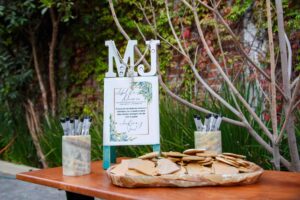
If you’re looking for a keepsake that combines convenience, modernity, and emotion, then this idea for a keepsake for turning 40 really stands out. Guests scan a QR code and immediately send photos, videos, and wishes through a browser — with no app installation and no account creation.
In practice, Wishgram works great here because it doesn’t stop at just the gallery. From the collected materials, an elegant e-book is created that you can download, share with your family, and even order as a printed photo book. It’s a more convenient and cost-effective alternative than a paper guest book with Instax or a photo booth, especially when you want more memories and a clear, organized set of materials.
An archival keepsake box with lists and small mementos
This is for people who like tangible things. In an aesthetic box you can collect letters, photos, concert tickets, postcards, and even small items related to shared moments. Such a keepsake has a different feel than digital formats — more intimate, quiet, and very personal.
To ensure the whole thing doesn’t look like a random storage compartment, choose one style: wood, linen, kraft, or an elegant box with labeled compartments.
A poster or framed print with the most important life moments
Not every keepsake has to go into a drawer. A timeline poster with key dates, photos, and short quotes can both decorate the room and tell a life story. It’s a good choice for people who appreciate aesthetics and simple form.
It’s best to limit it to 8–12 key moments. Too many elements weaken the effect, and readability and an emotional summary are what matter here.
A party photo book prepared after the birthday
This is one of those keepsakes that gains value over time. A photo book from the party itself lets you relive the emotions, the people, and the atmosphere of the evening — but only if the photos and wishes are collected in an organized way during the event.
That’s why solutions that organize the materials right away work best. If guests send everything in real time, preparing a polished book later is simply easier. And a good keepsake for turning 40 should not only be moving — it should be genuinely easy to keep for years.
How to choose the best keepsake idea for turning 40
The most common mistake? Choosing a keepsake that looks great on the table, but ends up in a drawer after a week. A good keepsake idea for turning 40 should fit not only the occasion, but also the celebrant’s personality, the scale of the party, and how much time you truly have to prepare. Sentimental people are chosen differently than someone who values laughter, ease, and the energy of the get-together the most.
A moving keepsake or something more fun
This distinction matters more than it may seem. Moving keepsakes work best when the relationship is the main focus: wishes from loved ones, shared photos, short recordings, stories from different stages of life. A digital memory book works particularly well here, especially Wishgram, because it gathers photos, text, and videos from guests in one place, and then turns them into an e-book or photo book. One important point: guests don’t need to install anything or create an account, so the participation barrier practically disappears.
Fun keepsakes are different in how they land. A photo booth, party props, or a humorous book of questions creates a quick effect and lots of laughter right away. The problem shows up later: after a few months, many of these materials lose their context. So if the celebrant likes emotional gestures and revisits memories, it’s better to choose something that preserves not only the images but also the meaning. If the celebrant is the life of the party and values the party atmosphere more than sentiment, a lighter format will be the right fit.
What works for a small gathering and what works for a big party
For a smaller get-together, say 8–15 people, keepsakes that require more involvement from individual guests work well: an album with handwritten entries, a box with “open when…” lists, pre-recorded wishes from family. In a small group there’s time for conversation, shared reminiscing, and a more personal format.
For a party of 30, 50, or 70 people, something else matters: simplicity and throughput. A paper guest book often creates bottlenecks, and a photo booth — although popular — takes up space, costs about $1300, and can set up a queue. Wishgram is more practical here, because guests add materials from their own phones via a QR code, with no app. Dozens of people can do this in parallel, without chaos and without needing to oversee a station. Alternatives include a classic guest book, Instax, or photo booths from companies like FotonBOX or Foto-Lustro, but those are usually add-ons rather than the most convenient end-to-end memory carrier.
How to match the keepsake to your budget and preparation time
If you’re working last-minute, solutions that are quick to set up win. A digital memory book is strong here: you can create an account earlier or right before the party, prepare a QR code sign, and start collecting materials without logistical complications. At a price of 299 zł, Wishgram is also clearly cheaper than the paper guest book plus Instax bundle, which often comes to around 1200 zł.
A larger budget makes sense when you want a “wow” effect in the room — decorative presentation, on-site printing, and extra support. But a high cost doesn’t always mean a better keepsake later. In practice, the best results come from solutions that combine a low entry barrier for guests with a lasting final effect. So if you want something aesthetic, easy, and truly useful after the party, choose not only a party attraction, but a format the celebrant will want to return to in a year, five years, and ten years.
How to get guests involved so the keepsake isn’t random
The worst keepsakes from parties aren’t ugly. They’re simply empty: a few photos, a couple of captions, and the obligatory “many happy returns,” to which nobody ever goes back. If the keepsake idea for turning 40 is truly meant to work, guests must get not only a place to leave a memory, but also a good prompt. People are more willing to respond to something specific than to a general “write something from yourself.”
What questions and prompts to give guests so they leave more than the usual “many happy returns”
Short prompts that trigger memory or emotions work best. Instead of asking for any wishes at all, narrow the topic. Then the answers are more interesting, more personal, and less repetitive.
- “What’s your favorite memory with the celebrant?” — this prompt pulls out stories, not set phrases.
- “What do you wish for him for the next 10 years?” — it gives the wishes a direction.
- “Tell us the funniest situation you remember” — great for short video recordings.
- “One life advice after turning forty” — a light format, often with humor.
Mixing formats also works well: some people prefer to write two sentences, while others quickly record a 15-second video. That’s exactly why a digital memory book like Wishgram has an advantage over a paper guest book. A guest can add a photo, text, or recording without installing an app and without creating an account, so the entry barrier is minimal.
When to collect entries, photos, and recordings: before the party, during it, or after
There’s no single perfect moment. But there are three good options — and each offers something different. Before the party, it’s worth collecting a few entries from people who won’t be able to make it or who want to say something more calmly. During the party you capture the energy of the room, spontaneous photos, and lively reactions. After the party come the “next day” memories: better phone shots, longer messages, and less rushing.
The most reasonable model? Combining all three stages. For example: a week before the birthday, you send a link to the closest people; during the party, you place a QR code sign on the table; and the day after the event, you remind guests they can still add something. It’s simpler and cheaper than a photo booth that only works for a few hours, and it’s more capacious than a paper guest book, where usually no more than a dozen people write anything.
How to make participation easier for people of different ages
Guest involvement often fails not because of lack of desire, but because of minor obstacles. If someone would have to search for an app, create an account, and learn a new tool in the middle of a party, they’ll simply skip it. That’s why the best solutions are almost invisible: scan a QR code, open a page in a browser, and you’re done.
In practice, it’s worth taking care of three things: a clear sign on the table, a short instruction in one sentence, and one person “on hand” to help older guests. At multi-generational parties, this makes a huge difference. If the interface is simple and available in several languages, as in Wishgram, it’s easier to include family from abroad too. And then the keepsake stops being just a collection of random entries and becomes something that truly reflects the character of these 40th birthday celebrations.
Digital or traditional keepsake for turning 40 — what works better
The biggest problem with birthday keepsakes isn’t that they’re missing. The problem is that many of them end up on a shelf, in a drawer, or in a phone that nobody returns to after a few months. That’s why the choice between an album, a paper guest book, and a digital format isn’t just a matter of style. It’s a decision about how you want to remember that day, and how easy it will be to come back to those memories a year, five years, or ten years later.
Paper guest book and album: when it’s still a good choice
The traditional format hasn’t gone out of style at all. For an intimate gathering, for example for 12–20 people, a paper guest book or a classic album still makes sense. Especially when the celebrant likes tangible things, handwritten entries, and a more elegant, calm keepsake character.
Handwritten wishes have weight that a digital text sometimes can’t replicate. You can see the handwriting, the tiny cross-outs, the joke added in the margin. This works particularly well when guests really sit down, take a moment, and write something more than two sentences. In practice, though, there’s a limitation: not everyone has time for that, and even fewer people remember to add a photo.
A classic album also wins aesthetically if you want one, closed form standing on a shelf. But it’s less flexible. It won’t collect videos, spontaneous guest photos, or messages from people who couldn’t make it.
A digital memory book: convenience, more materials, and easy sharing
If the goal is a fuller record of the evening, a digital memory book usually works better. And it’s not because it’s “modern,” but because it matches guests’ real behavior. People take photos on their phones anyway. So it’s better to make it easy for them to send them right away than to hope that later someone will send anything at all.
A good digital keepsake for turning 40 can gather photos, short videos, captions, and text wishes all in one place. Without limitations of a few pages, without fighting for space on the table, without the risk that one spilled glass of wine will destroy half of the memories. Plus there’s the convenience of sharing: the e-book can be kept, sent to family, and revisited from any device.
It’s also a better keepsake idea for turning 40 when you want to capture not only official moments, but also what usually slips by: funny selfies, a short toast recorded by friends, or wishes from someone abroad.
When a modern solution like Wishgram makes the most sense
After testing different options, one thing is clear: with a larger number of guests, the advantage of digital solutions becomes very concrete. Wishgram works especially well when there are 25, 40, or 60 people at the party and you want to collect memories from as many of them as possible, not just from the most organized people.
Simplicity is what matters. Guests scan the QR code and can immediately add a photo, a video, or wishes in their browser — without installing an app and without creating an account. It seems like a small detail only at first glance. In practice, it’s exactly these barriers that most often cause a “great idea” to end up as an empty gallery.
Compared with a classic paper guest book, a bundle of guest book plus Instax, or even a photo booth, Wishgram has another advantage: it organizes everything into a finished keepsake, namely an e-book, and optionally also a printed photo book. So you don’t end up with file chaos — you get something complete, aesthetic, and ready to keep for years. That’s when the digital format stops being a gimmick and becomes the more practical choice.
How to turn collected materials into a keepsake you’ll genuinely want to revisit
Most memories don’t disappear because nobody made them — they disappear because later they end up in three phones, two messengers, and one “I’ll sort it out this weekend.” And then months pass. So if a good keepsake idea for turning 40 is truly meant to work, the key is not only collecting the photos and wishes themselves, but what you do with them after the party.
How to select photos and entries without losing the most important emotions
The most common mistake? Leaving everything. Paradoxically, 250 almost identical photos can create a weaker effect than 40 carefully chosen shots. The keepsake is all about rhythm: one family photo, then a spontaneous burst of laughter by the cake, then a short caption from a friend that says more than an entire series of poses.
It’s worth choosing materials based on variety, not just technical quality. A slightly shaky dance photo can be more valuable than a perfect portrait if it captures the energy of the evening. The same goes for entries: a short, sincere wish with a caption often has more value than a long, formal text without character.
- keep shots from different moments of the party, not just at the beginning,
- save captions and names — next year, they’ll trigger memories,
- don’t delete all spontaneous pictures, even if they aren’t perfect,
- limit repetitions so the final keepsake doesn’t tire people out by constant scrolling.
In practice, a simple filter works: does this photo or entry show a relationship, an emotion, or a specific scene? If it doesn’t, it probably doesn’t need to make it into the final version.
In what form to keep the keepsake: e-book, print, photo book, or an archival box
Format matters because it determines whether you’ll actually return to the keepsake. An e-book works best when you want to quickly organize photos, wishes, and short recordings into one place and share it conveniently with family. That’s why solutions like Wishgram are so practical today: guests don’t install anything or create accounts, and after the event the collected materials can be assembled into an elegant digital memory book instead of manually rewriting entries from paper.
A printed photo book is an option for those who like a physical item on the shelf and the ritual of looking at it with coffee. An archival box with prints, cards, and small trinkets has its own charm, but it requires more discipline and it’s easier for chaos to build up inside.
A paper guest book with attached Instax photos or a photo booth still has its fans, but as a final keepsake they often lose out to a well-designed e-book or photo book. They’re more expensive, less complete, and harder to share with loved ones.
How to store memories safely and share them with family
Even the prettiest keepsake has no value if it exists only on one phone. The minimum safety is two copies: one locally and one in the cloud or on an external drive. If you’ve collected photos, videos, and wishes in one system, organizing things immediately becomes easier.
It’s also good to separate two things: the archive and the viewing version. The archive should contain the original files, while the viewing version should include a finished album, a PDF, or a gallery you can send via a link to family. That way you don’t have to dig through hundreds of individual files every holiday.
The best keepsake isn’t the one that’s “somewhere.” It’s the one you can open in a minute and show to others without explaining where everything was saved. And that’s when memories start to live on for real, for a long time.
Choose a keepsake that will truly be “about him” or “about her”
The best keepsake idea for turning 40 isn’t the most eye-catching one in photos, but the one that reflects the celebrant’s character and lets loved ones leave something of their own. So before you decide on a specific format, think about what memories you want to keep: spontaneous wishes, funny shots, short videos, or maybe everything at once. It’s the guests’ involvement that makes the gift stop being just an object and become a story you truly want to return to.
If you care about combining photos, wishes, and videos into one lasting keepsake without making anything difficult for guests, a digital memory book might simply be the most convenient solution. With Wishgram, guests join without installing an app and without creating an account, and from the collected materials, an elegant e-book or photo book for years is created. A good keepsake doesn’t end the evening — it lets you relive it whenever you want.