
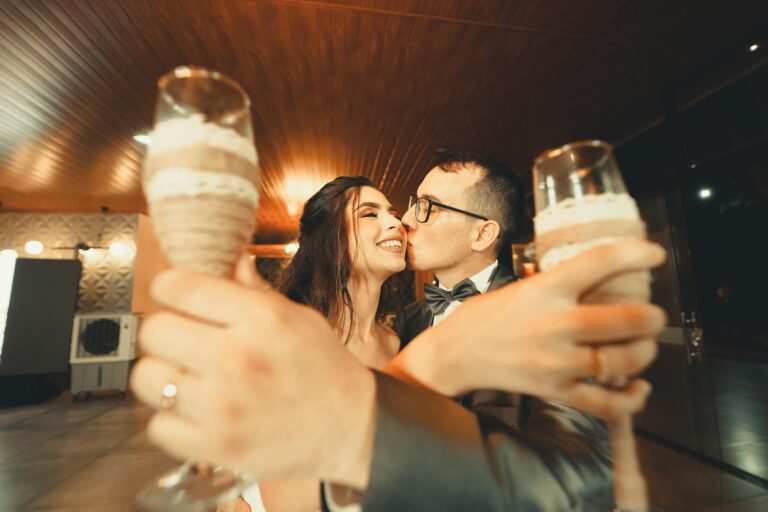
The hardest part of wedding wishes isn’t finding pretty words — it’s finding those that truly mean something. Because when the moment comes, suddenly everything sounds either too stiff, too banal, or like a last-minute template copy. If you type the phrase the most beautiful wishes for the newlyweds into a search engine, you’re probably not looking for “anything”, but words that will suit this one, particular couple.
Maybe you want to say something elegant and moving. Maybe you need a short line to write in a card, a message, or a digital memory book. Or maybe you already know what you don’t want: empty phrases, clichés, and wishes that sound good only for the first three seconds. That’s exactly why it’s so hard to hit the mark — wedding wishes should be beautiful, but also personal.
There are, however, words that can move without exaggeration, make people smile without awkwardness, and stay with the newlyweds longer than just the wedding day. Sometimes a single well-crafted sentence is enough to turn an ordinary note into a keepsake people return to for years. And that’s where everything starts — with wishes like those.
How to write the most beautiful wishes for the newlyweds so they sound sincere and not trite
The best wedding wishes are rarely the most lofty. Most often the winners are those that sound as if they could really come from a specific person, not copied from a ready-made template. That’s why the most beautiful wishes for the newlyweds don’t have to be long or poetic. They have to hit the mark. To the point, to the feeling, to the truth about that relationship.
In practice a simple rule works: the less pretension, the more emotion. One apt sentence about who they are together usually means more than five lines about a “path strewn with roses.” If you want to write something that will stay with the newlyweds for years — in memory, on a card, or in a digital memory book like Wishgram — opt for a personal tone, a concrete image, and kindness without embellishment.
What good wedding wishes should include
Good wishes have a simple structure. It’s not about a literary display, but about a clear thought. It’s best to start with a direct address to the newlyweds, then say what you really wish them, and finish with a touch that shows you’re writing to them specifically, not to “any couple.”
The most effective order is usually: address, main idea, wish for the future, personal detail. That can be one memory, a short observation, or a sentence like: “Looking at you, you can see that calm and joy can go together.” Such a concrete remark immediately warms the text.
It’s also worth remembering that simplicity doesn’t mean banality. The sentence “I wish you a daily life you’ll both want to come back to” sounds natural and fresh, even though it’s not complicated. On the other hand, overly ornate language often distances from emotion instead of bringing you closer to it.
How to match the tone of wishes to your relationship with the newlyweds
This is one of the most often overlooked elements. You write differently to a sister, differently to a friend, and yet differently to a colleague. And that’s good — matching the tone is what makes wishes credible.
For siblings or close friends you can allow more warmth, memories and emotion. Personal, even slightly informal sentences work well here. If you’re writing to more distant family or coworkers, it’s better to opt for elegance and warmth without excessive familiarity.
- Siblings and close friends: more memories, ease and personal references.
- Extended family: a warm, classic tone with one individual touch.
- Work colleagues: short, kind, respectful, without overly private jokes.
- Older generation to the young: simple, wise, without moralizing.
Ask yourself one question: would I say this to them directly, to their faces? If not, the text probably sounds too artificial.
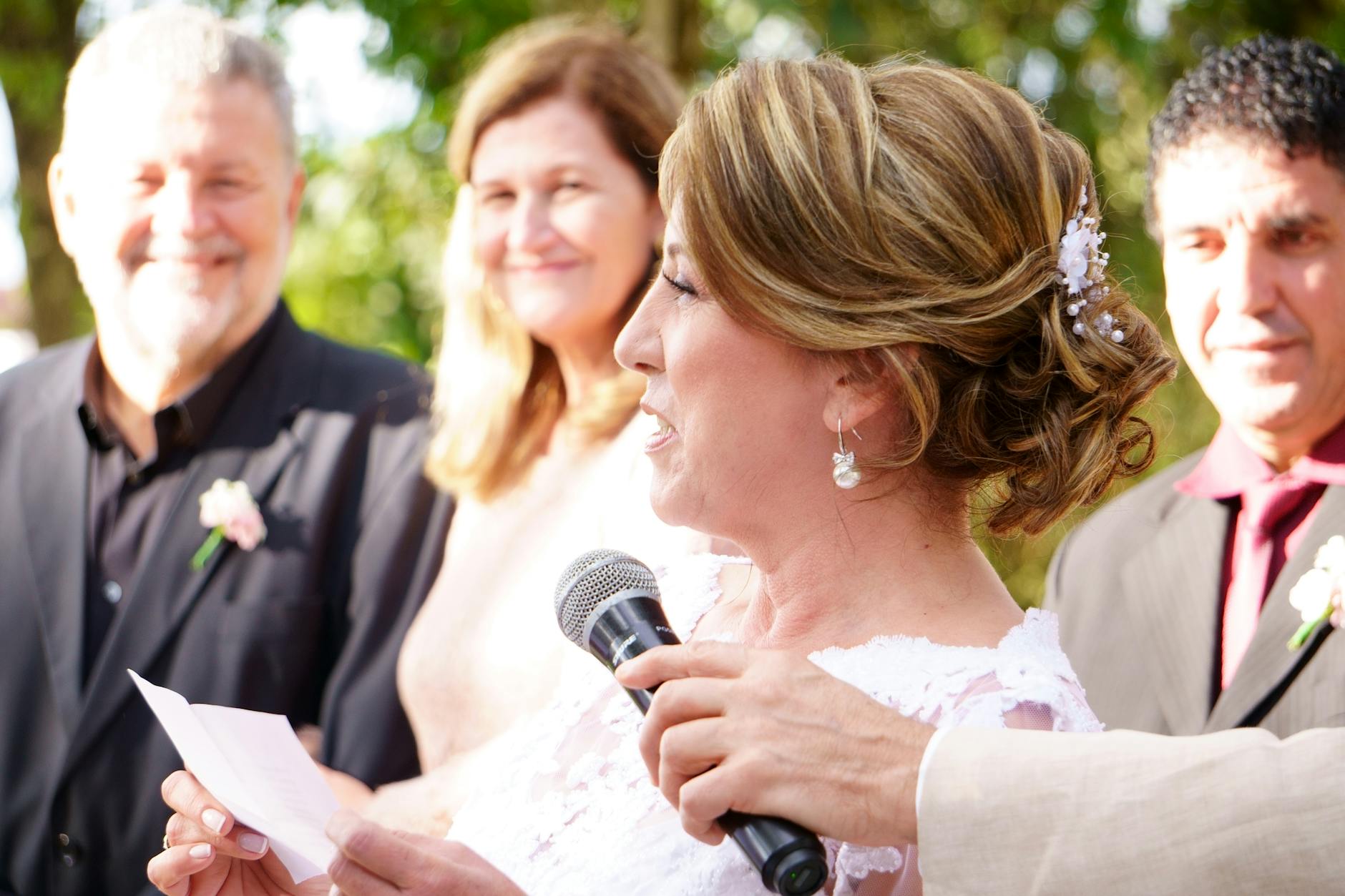
Common mistakes that make wishes sound artificial
The biggest mistake? Pathos that doesn’t fit the speaker. If you normally communicate plainly, a sudden “may fate weave golden threads of your destiny” will sound more awkward than moving. The second problem is copying ready-made formulas. The newlyweds have really heard most of them — often many times at a single wedding.
Lengthiness doesn’t work either. Wishes should leave a mark, not tire the recipient. 3–5 sentences are enough if each brings something. You also have to be careful with humor. A joke can loosen the atmosphere, but only if it’s understandable, kind, and well-timed. A joke about marital fights or the “end of freedom” is often more awkward than funny.
Well-written wishes don’t try to impress. They show that you truly see these two people. And that’s what people remember the most.
The most beautiful wishes for the newlyweds — ready examples for different occasions and styles
The hardest part of wishes isn’t finding pretty words, but finding those that sound true. Two sentences can move more than a long, pompous text. That’s why the most beautiful wishes for the newlyweds are usually those that fit the relationship, the moment, and the character of the ceremony.
Short and elegant wedding wishes
Classics don’t have to be banal. Short wishes work well on a card, with a bouquet, and also when emotions during the blessing are bigger than the prepared plan.
- May your love be a calm force that guides you through life.
- We wish you daily joy, mutual respect, and many beautiful moments together.
- May every day of your marriage bring you closeness, harmony, and the feeling that you are in the right place.
- Lots of love, patience and happiness built together, day by day.
Touching wishes full of warmth and emotion
This is a good choice for parents, siblings, witnesses, or close friends. In such wishes what matters is not ornateness but sincerity. Better to say less but truly.
Today we look at you with great emotion and joy. We wish that you will always be able to find home, support and peace in each other, even when life asks harder questions.
May your shared path be full of tenderness, late-night conversations, small gestures, and the certainty that there is someone beside you you can count on no matter what.
We wish you a love that not only dazzles in great moments, but grows even more beautifully in everyday life.
Wise wishes for life together
Many people confuse wise wishes with solemnity. Wrongly. The most accurate words about marriage concern simple things: conversation, patience, partnership. These are what determine the quality of shared life more often than grand declarations.
We wish that you will always be on the same side — even when you have different opinions.
May your marriage never lack trust, attentiveness and the courage to choose each other anew every day.
Build happiness not only for special occasions, but above all in ordinary days, because those are what create the most lasting love.
Funny wishes for the newlyweds with class
Humor works great when it’s light and kind. A wedding is not a roast. Good funny wishes make you smile but don’t embarrass the young couple.
- We wish that the only heated exchange of words you have will be about what to order for dinner.
- May love bloom, coffee always taste good, and arguments end faster than choosing a movie for the evening.
- Lots of laughter, little sulking and endless patience — especially when assembling furniture and planning holidays.
Religious wedding wishes
For many people a wedding is not only a ceremony but also an important spiritual moment. In such wishes it’s worth referring to blessing, God’s care, and the meaning of the vow.
May God bless your marriage, strengthen your love and guide you through all the days of your life together.
We wish that your home be full of peace, faith, mutual goodness and gratitude for each shared day.
May the sacrament of marriage be for you a source of strength, hope and a love that matures under God’s care.
If you want your wishes not to get lost among envelopes and cards, it’s worth saving them in a form the newlyweds will actually return to. That’s why more and more guests choose solutions like Wishgram — a digital memory book where, besides text, you can also add a photo or a short film, without installing an app or creating an account. It’s simply a convenient way for beautiful words to stay with the couple for years, not just until the end of the wedding night.
Wishes for the newlyweds tailored to who you are to them
It’s not the length of the wishes that decides their strength, but their appropriateness. A mother’s words sound different from a friend’s, and different again from a coworker’s. That’s why the most beautiful wishes for the newlyweds are not always the most poetic phrases, but those that suit the relationship, the tone of the moment and the shared history.
Wishes from parents and godparents
Here seriousness, warmth and the sense that the young receive more than a pretty sentence matter — they receive a blessing for a new stage. In wishes from parents and godparents words about support, perseverance, mutual respect and pride sound good. No need to overdo the pathos, but it’s worth speaking in a solemn tone.
Example: “Dear ones, we wish that your love matures with each day, and that your life together is full of harmony, health and mutual support. May you never lack tenderness, patience and the courage to walk together through whatever fate brings.”
If you want, you can add a personal touch: a childhood memory, the moment of the engagement, or a short assurance: “You will always have a home and support in us.” Such a sentence often moves more than a long speech.
Wishes from siblings and close family
Siblings have the privilege of speaking more intimately and closer to everyday life. Heartfelt, less formal wishes work well here, sometimes with a touch of a shared memory. This relationship allows combining warmth with authenticity.
Example: “I wish you that you always know how to laugh together as genuinely as you do today. May your home be full of peace, good conversations and people with whom you can be yourself.”
Close family can also allow a more personal tone: recall shared holidays, family celebrations, or a trait that has distinguished the bride or groom for years. This makes the wishes stop being just “nice” and become truly someone’s.
Wishes from friends
Friends usually sense the balance between emotion and lightness best. And that’s good, because a wedding is not a memorial service. Wishes from friends can be casual, sincere and specific. Instead of grand declarations, images from life often work better: morning coffee together, laughter after an argument, travels, ordinary days that turn out to be the most important.
Example: “I wish you a love that doesn’t end after the wedding but truly begins in everyday life. May you be comfortable together in silence, laugh easily, and always find your way back to each other after a difficult day.”
This is also a great relationship for a more modern form. If you’re sending wishes through Wishgram, you can add a short recording or a photo with your shared story in the background. That format often conveys emotion better than a card alone, and guests don’t need to install anything or create an account to leave a keepsake.
Wishes from coworkers or more distant acquaintances
The most common mistake? Too much familiarity. When you know the couple less closely, it’s best to opt for elegance, simplicity and good intent. Such wishes should be universal, but not cold.
Example: “On the occasion of your wedding, I wish you many beautiful moments, mutual understanding and happiness in building a shared future. May this day be the beginning of a long and good life together.”
That’s a safe formula that sounds classy and suits both a card entry and a short message or a post in a digital memory book. If you don’t share a deep relationship, there’s no need to pretend greater closeness. Better to write less, but sincerely.
How to deliver or write wishes so they are truly remembered
How to compose wishes for a card, a speech and a message
The most common mistake? People confuse length with the strength of the message. In practice, the words that stick are not those that last five minutes, but those that sound true and are well suited to the situation.
On a card, slightly fuller wishes work: 4–8 sentences are usually enough to combine a warm tone, a concrete thought and a short closing. It’s a good format if you want to leave something the couple will return to later. Start with addressing the newlyweds, add one personal sentence, then get to the point: what you truly wish them — peace, courage, tenderness, a sense of humor in daily life.
A speech follows different rules. Here a simple structure works better: a short opening, one image or memory, one strong wish for the finale. One to two minutes is a safe range. Any longer and you risk even the most beautiful wishes for the newlyweds getting lost in the guests’ fatigue and the noise of the reception hall.
A text message or online post should be concise but not cold. Two to four sentences sound natural. Instead of writing generalities like “all the best on your new path of life,” opt for a more specific tone: “I wish you the kind of lightness with which you looked at each other during the first dance today.” That single sentence says more than a ready-made template copied from the internet.
How to add a personal touch without writing a long essay
You don’t have to be a poet to write something special. One detail is enough. Details are what distinguish a heartfelt entry from a correct one.
The simplest method is to use one of three elements: a memory, an observation, or a reference to the future. A memory can be short: the first holiday together, the engagement story, a conversation from years ago. An observation works just as well: “I’ve always admired how you can laugh even when nothing goes according to plan.” And a reference to the future gives the wishes direction: “May you still look at each other with the same tenderness in 20 years.”
If you don’t know the couple very well, you’re not out of luck. Just refer to what you see here and now: the atmosphere of the day, the emotions during the ceremony, the way they are with each other. Such a comment is safe and at the same time doesn’t sound anonymous.
A good rule is simple: one personal sentence for every three general ones. That’s enough for the wishes to have character without turning into a private essay.
How to preserve wishes and wedding memories in a modern form
A card is beautiful, but it can also be helpless. It won’t record laughter, a trembling voice, or a spontaneous photo from the end of the dance floor. That’s why more and more couples today want to preserve not only the text but the entire emotional background of the wishes.
In practice, a combination of classic and digital formats works well. A traditional card can remain a symbolic keepsake, while at the same time it’s worth collecting guests’ photos, short videos and entries that won’t get lost in envelopes or phones. This is where a digital memory book like Wishgram makes sense. Guests scan a QR code and — without installing an app or creating an account — send wishes, photos and recordings straight from their browser. That’s important, because simplicity matters at a wedding — the fewer steps, the more people actually add something.
Compared to a classic paper guestbook with an Instax camera or a photo booth, this solution has one advantage that’s hard to overestimate: memories don’t end with a few prints and short captions. From the whole collection an elegant e-book is created, and optionally a photo book you can return to like a well-told story of the wedding day.
And that’s the point. Wishes should not only be heard in the moment, but remain with the couple for years — in words, images and voices that truly mean something.
Frequently asked questions about wishes for the newlyweds
How long should wedding wishes be?
The most common mistake? The belief that the longer, the more moving. In practice good wedding wishes often fit into 3–6 sentences. That’s enough to say something warm, specifically address the couple and avoid pathos.
A short form works well when offering wishes at the table, in line after the ceremony, or when writing a few words on a card. A longer version is worth saving for a letter, a speech or an entry in a digital memory book, where you can add an anecdote, a memory or a personal touch. If you use a solution like Wishgram, you have more space than in a traditional paper guestbook, and guests can leave not only text but also a photo or a short film — without installing an app or creating an account.
A simple rule works almost always: one warm thought, one wish for the future, one personal detail. That sounds natural and stays in memory.
Is it appropriate to copy ready-made wishes from the internet?
Yes, but only as a starting point. Copying ready-made formulas word for word usually sounds correct but anonymous. And on the wedding day anonymity is the last thing you want.
If you find a text that well expresses what you feel, treat it as a sketch. Change one sentence, add names, refer to the couple’s character or something that distinguishes them. Even a small detail makes a difference. Instead of the generic “lots of love and happiness,” it’s better to write: “I wish that in 20 years you will still look at each other with the same calm and humor visible in every gesture today.”
That’s why the most beautiful wishes for the newlyweds don’t have to be literarily perfect. They should be recognizable as yours. Sometimes one original sentence means more than a whole ready-made paragraph found online.
How to write wishes if I don’t know the newlyweds very well?
This is a common situation: you’re a plus-one, a colleague, extended family or an acquaintance from one circle. In that case an elegant, kind and unobtrusive tone works best. Don’t force an intimate message if the relationship doesn’t justify it.
A safe and good scheme is simple: offer congratulations, wish love, peace and mutual support, and finish with a short, warm closing. For example: “I wish you many beautiful moments, mutual understanding and joy in building a life together.” That sounds appropriate even if you don’t know them well.
Avoid inside jokes, overly personal allusions and texts that could sound awkward. In such cases it’s better to choose class over effect.
How to combine wishes with a gift or an envelope?
The simplest approach: be brief, calm and without more ceremony than the moment requires. When handing over an envelope or a gift, there’s no need to explain its value or add a long introduction. A few sentences spoken sincerely and with a smile are enough.
Combining spoken wishes with a card attached to the gift works well. That way the couple hears your words immediately and can return to them later. More and more people also leave wishes in a digital keepsake form, because paper cards are easy to lose, while memories gathered in one place simply have more value over time.
If you want to avoid awkwardness, don’t talk about money directly. Focus on the intention: “May this gift be useful to you in your new life together.” That’s enough. Naturally, with class and without unnecessary formality.
Let your words really stay with them
The most beautiful wishes for the newlyweds don’t come from elaborate phrases but from attentiveness. If you want to write something that will really resonate, use ready examples only as a starting point and add one sentence that no one but you could have written — a memory, an observation, a short gratitude or a quiet hope for their shared path. That personal detail is what makes wishes stop being a formality and become a keepsake.
It’s also worth thinking about the form in which those words will stay with the newlyweds longer than one evening. If you want your wishes not to get lost among cards and the hustle of the wedding day, a solution like Wishgram works well — guests can send wishes, photos and short films without installing an app, which then turn into an elegant memory book. So write less “perfectly” and more in your own voice — because those are the words people remember the longest.