The most beautiful wedding wishes rarely fit into a few sentences scribbled with a trembling pen between dances. Often it’s those spontaneous moments — a photo from the dance floor, a short video recorded at the table, a few warm words sent after the reception — that stay with the newlyweds longer than a traditional guest book. That’s why personalized wedding wishes online stop being just an add-on and become a keepsake that truly captures the emotions of the whole day.
If you’re organizing a wedding and want to keep more than signatures and a few pasted photos, the digital format simply wins by convenience. Guests don’t need to install anything or create an account — just a phone and a quick scan of a QR code to leave wishes, a photo or a video. No queues, no limits, no risk that the most precious memories will get lost somewhere between the tables and the end of the night.
This is where a modern approach to a wedding keepsake comes in: not a one-time gadget, but an elegantly collected story made of words, images and emotions. For couples looking for something practical, aesthetic and ready to share with loved ones, Wishgram meets a specific need — it turns guests’ memories into a digital guest book you’ll actually want to return to.
What personalized wedding wishes online are and why they’re gaining popularity
The most precious wedding memories rarely fit into two hurried sentences written with a pen. Today guests want to leave more: a photo from the dance floor, a short message, a signature, sometimes a few seconds of a congratulatory recording. That’s what personalized wedding wishes online are about — they’re not single entries but a digital keepsake that combines different types of content into one coherent whole.
Their popularity doesn’t come only from a trend for technology. It’s an answer to very specific needs of couples: convenience for guests, more authentic memories and the ability to keep everything in an aesthetic, easy-to-share form. Importantly, a well-designed solution doesn’t stop at collecting files. It turns them into an organized memory book you’ll actually want to revisit.
What modern wedding wishes look like in a digital version
In the digital version wishes stop being only text. They can consist of several elements at once: a short message from a guest, a photo, a signature, even a video recorded on a phone. The difference is evident immediately. Instead of a perfunctory “best wishes on your new journey,” the newlyweds receive context, emotions and the faces of people who were there that day.
But an important distinction: digital wishes shouldn’t mean a chaotic folder full of random files. They work best when they form a ready keepsake — an elegant e-book or photo book, not just a collection of photos to browse later. This is exactly where Wishgram stands out. Guests add content through the browser, without installing an app or registering, and the couple receives an organized digital memory book that can be downloaded, printed and shared with loved ones.
Why guests are more likely to leave wishes via phone than in a paper guest book
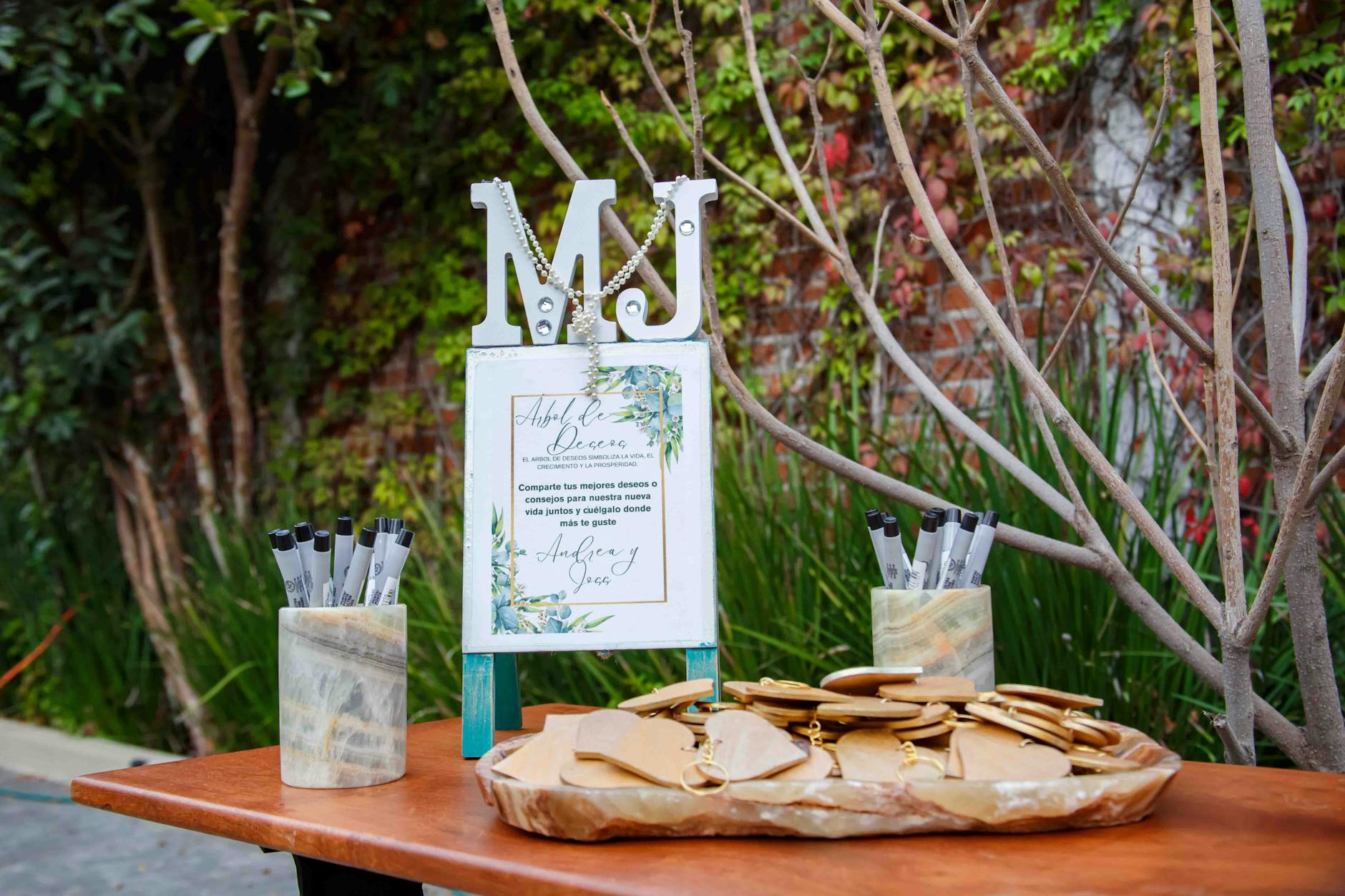
A paper guest book has its charm, but in practice it often loses out to the reality of a wedding. It sits on a separate table, you have to approach it, find a moment, borrow a pen, sometimes peel off an Instax photo and add something. The result? Many people postpone it, and later it usually doesn’t happen.
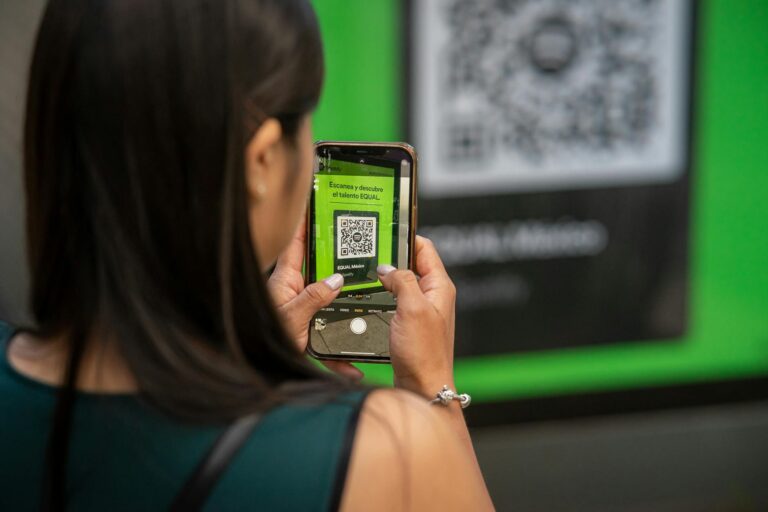
The phone works differently because it removes almost all barriers. A guest scans the QR code, opens a simple form and can immediately add wishes. No queue. No login. No downloading anything. That’s crucial, because even the best idea fails if it requires five more steps than people are willing to take during a party.
In practice, such simplicity translates into a higher number of entries and more natural content. Someone will add a group selfie from the hall, another will record a short video after the first toast, and an aunt who doesn’t want to write much will leave one warm sentence and a signature. From the couple’s perspective that’s invaluable: there are more memories, they’re diverse and they don’t disappear after the event into a drawer or a damaged book.
Which occasions and wedding styles best suit this format
Digital wishes work in more situations than many expect. Not only at modern minimalist or glamour weddings. They also perform well at classic receptions, small family weddings, post-wedding gatherings, and even international weddings where simplicity and multilingualism matter.
This solution is especially suitable where a couple wants to combine aesthetics with convenience. On one hand you can match the colors and look of the book to the wedding theme, on the other — guests use a tool they already have in their hands. At weddings with guests from different countries, having multiple language versions of the interface is also important. That way no one feels excluded.
In short: personalized wedding wishes online fit wherever a true keepsake matters, not just a mandatory program item. That’s why they’re gaining popularity — they’re more convenient for guests, richer for the couple and far more durable than traditional solutions.
How Wishgram works as a digital memory book for a wedding
Event setup and personalization to match the wedding style
The biggest advantage of a modern guest book doesn’t start on the wedding day, but much earlier. That’s when the couple can calmly prepare everything without time pressure, and with Wishgram even without paying at the account creation stage. That matters, because many couples postpone choosing extras until the last minute and end up with a solution that doesn’t fit the character of the reception.
In practice the start is simple: create an event at app.wishgram.app and then adjust its appearance to the wedding theme. You can set the colors of the QR card, the screen where guests enter wishes, and the final e-book. This way the whole thing doesn’t look like a random technical tool, but a cohesive part of the wedding decor. If beiges, bottle green or classic white and gold dominate, the digital memory book can reflect that immediately.
This is where personalized wedding wishes online stop being just a buzzword. They begin to act as a real keepsake designed for a specific couple, not an anonymous template.
How guests add wishes, photos and videos via QR code
If a guest has to install an app, create an account and confirm their email, most will simply give up. Wishgram bypasses this problem completely. The guest scans the QR code with a phone, opens the page in the browser and can act immediately. No registration, no downloading, no explaining at the table “what to click”.
The process is short and intuitive: you can take a photo or add one from the gallery, record a short video, write wishes and sign with a name. All of this reaches the system in moments. For some guests one photo and a short entry are enough, others will add a funny dance-floor clip or longer wishes from the whole family. That flexibility matters because a wedding doesn’t follow a single script.
An additional advantage is the multilingual interface. At international weddings, where besides Polish guests there are loved ones from Germany, Ukraine or the UK, this isn’t a detail but a feature that truly increases the number of collected memories.
What the couple gets after the wedding: gallery, e-book and photo book
After the wedding the most valuable thing is that memories aren’t scattered across guests’ phones. All materials go to the organizer’s panel where they form an organized gallery. You can browse it, return to specific moments and share it with guests via a link instead of asking each person individually for photos.
The most important final result, however, is not the gallery itself but the elegant e-book generated from the collected content. The couple chooses the layout, content and appearance, then downloads the ready PDF. That’s a marked difference compared to a paper guest book or an Instax camera, which give one physical keepsake but don’t offer such convenient access and archiving.
If someone wants a tangible keepsake, they can order a printed hardback photo book. It’s a sensible closure of the whole process: from quick content addition by guests to a durable keepsake you return to over the years.
Which Wishgram features matter most in practice
On paper many solutions look good. In practice four things count. First, unlimited number of memories. At a larger wedding of 80 or 120 people you quickly see how limiting traditional formats can be. Second, original file quality, because a keepsake for years shouldn’t be a collection of compressed photos.
Third, no entry barrier for guests. Here Wishgram beats solutions that require installation or technical savvy. Fourth, sharing the gallery via a link, so memories live on after the party. Compared to a photo booth or a setup of a paper guest book plus an Instax, it’s simply a more complete solution and about four times cheaper than classic alternatives.
Wishgram vs traditional solutions: what works better at a wedding
The most expensive wedding keepsake is often not the one you pay the most for, but the one that leaves little after the wedding. In practice this is where a modern solution wins: not just the effect on the night, but what the couple gets a week, a month and several years later. If the goal is personalized wedding wishes online that you can truly preserve, view and share, Wishgram simply fits modern wedding realities better than classic offline options.
Paper guest book and Instax vs digital wishes online
A paper guest book has charm. That’s a fact. Handwritten entries, pasted Instax photos, sometimes a funny drawing from the best man — it hits emotionally. The problem starts when you count costs and limitations. A guest book set plus an Instax camera and film usually costs around 1200 PLN, and the number of photos is inherently limited. When the film runs out, spontaneous shots end too.
Wishgram solves this problem without taking away the keepsake’s character. Guests scan the QR code and add a photo, text, signature, or even a short video in the browser. No app installation, no login, no explaining to everyone at the table what to click. That’s more important than many couples realize during planning.
There’s also the issue of durability. Paper can be spilled on, creased or simply put away in a closet. An Instax photo may be beautiful, but it exists only in one copy. In Wishgram memories go to a digital memory book that generates an e-book and optionally a printed photo book. In other words: sentiment remains, but the risk of the entire keepsake disappearing due to one unfortunate incident is gone.
Photo booth vs Wishgram: convenience, space and guest engagement
Photo booths still have fans and it’s easy to see why — they give quick results and some fun. However, logistics matter at a wedding. A photo booth takes up space, usually costs around 1300 PLN and often creates queues. Some guests use it immediately, others skip it because they don’t want to wait or a first dance, cake or table conversation is happening.
Wishgram works differently: it doesn’t draw guests to a single point but allows them to add memories whenever they feel like it — at the table, on the dance floor, on the terrace, even after the party. That’s a huge advantage because the best wishes rarely arise in a queue. They happen when someone suddenly remembers a shared story and wants to record it right away.
Tests of such solutions repeatedly show one thing: the less friction, the more content. If there’s no operator, extra station or user manual, the number of photos, messages and videos increases. And that’s the point — not the attraction itself, but a richer keepsake.
Cost of the keepsake: what you get for 299 PLN
Here the difference is most concrete. Wishgram costs 299 PLN per event, about four times less than a paper guest book with an Instax or a photo booth. For that price the couple gets not only the ability to collect memories but a full system for building a keepsake: photos, videos, text wishes, signatures, color personalization, a ready QR code, a gallery and automatic e-book generation.
Added to that is file storage in original quality for 12 months and no limit on the number of memories or sending time. That matters because some guests only look through photos a day after the wedding and want to add something later. With traditional solutions that moment is simply wasted.
If someone is looking only for nostalgia, paper will still have its charm. But if the goal is a convenient, complete and durable keepsake that combines emotion with practicality, Wishgram is today a more sensible choice than a classic guest book, Instax or photo booth.
How to plan collecting wedding wishes online so guests actually use it
The idea alone is not enough. Even the best digital guest book won’t work if it’s placed “somewhere next to” the program instead of becoming a natural part of it. A common mistake is: the couple orders the solution, prints a QR code and assumes guests will figure out what to do. In practice simplicity, visibility and timing matter. If the goal is personalized wedding wishes online, you need to plan not only the tool but how people will actually reach for it.
Where to place the QR code and how to inform guests about the activity
The QR code should be where guests naturally stop and look. Best spots are the tables, the entrance area, near the bar and next to the guest book or seating plan. One sign is not enough. If a guest has to stand up, cross the hall and only then send something, they usually postpone it. And later it often doesn’t happen.
A good practice is multiple touchpoints. A small, aesthetic sign on every table. A larger notice at the entrance with a short instruction. Plus one official reminder from the host, DJ or wedding planner. Short, specific and without pomp: scan, add a photo, write wishes, record a few words. The less explanation, the better.
Here Wishgram’s advantage is very practical: guests don’t need to install anything or create an account, they just open the form in the browser. It’s a small detail, but such details make half of wedding “digital attractions” fail. Paper guest books and Instax can be impressive, photo booths attract attention, but both options usually cost around 1200–1300 PLN and operate at a single point. For 299 PLN Wishgram lets you collect memories throughout the evening without queues or taking up extra space.
How to encourage more personal and creative messages
Guests are more likely to send something when they know what to send. An empty text field can be surprisingly intimidating. That’s why it’s worth adding short prompts on signs or in the host’s announcement: “Write where you see us in 10 years,” “Add the funniest memory with us,” “Record a 15-second tip for a successful marriage.” Suddenly a simple “best wishes” becomes something you’ll want to return to.
A playful tone also works well. An informal voice, one line of humor, encouragement to take a selfie or record a short video. Many people don’t realize they can add a photo and text at the same time, so it’s worth saying it explicitly. At international weddings a multilingual interface helps too. If some guests speak other languages, the entry barrier drops immediately.
From experience, three types of messages perform best: quick selfies with wishes from couples of friends, short recordings from family and more personal entries from close friends. That’s exactly what a digital memory book provides, not just a pile of files.
What to do after the wedding to organize memories and share them with loved ones
After the wedding it’s not worth leaving materials “for someday.” The best time to organize memories is the days right after the event while emotions are still fresh. In Wishgram collected photos, videos and wishes go into one panel from which you can prepare an e-book color-matched to the wedding style and then download it as a PDF or order a printed photo book.
That matters because the goal isn’t merely collecting content but creating a keepsake you can revisit in a year or ten years. It’s also worth sharing the gallery link with guests a few days after the wedding. Such a gesture extends the life of the event: people return to photos, show them to family and add belated messages. That’s when you see that well-planned online wishes aren’t a technological extra but part of a shared memory.
What to pay attention to when choosing a solution for personalized wedding wishes online
Most couples compare features. That’s understandable, but often that’s not what determines the result. In practice the winning solution is the one guests actually use and that leaves something more than a folder of random files after the wedding. So if you’re considering personalized wedding wishes online, look not only at “can you add a photo,” but at the whole journey: from the guest’s first click to the keepsake ready years later.
Is the solution truly simple for guests
This is the most important and often underestimated criterion. Every extra step reduces the number of submitted wishes: app installation, account creation, logging in, email confirmation. For some guests it’s trivial. For others — an effective barrier.
At a wedding timing matters. Someone sits at a table, scans a QR code and wants to quickly add a photo and a few words. If they reach a simple browser form in 20 seconds, the chance of participation rises significantly. If they have to download something, they postpone it and later it usually doesn’t happen.
That’s why Wishgram performs particularly well here: it works without installation and without registration, directly in the phone browser. This matters not only for older guests but for anyone who doesn’t want to waste time during the celebration. Alternatives like a classic paper guest book with Instax or a photo booth have their place but are less flexible: one creates queues and requires physical handling, the other limits the number of entries and photos.
Is the final result just a collection of files or a keepsake for years
Ask yourself a simple question: what will remain after the wedding? Collecting photos and messages isn’t enough if you then have to manually organize, download, caption and compile everything. Many tools help gather content but don’t lead to an elegant finale.
A good solution should turn guests’ materials into an organized, aesthetic keepsake. With Wishgram it doesn’t end at a gallery: photos, texts, signatures and videos can be assembled into an e-book and optionally into a printed photo book. That’s a meaningful difference. You don’t get an archive, you get a finished product you’ll want to return to.
If you’re considering a photo booth, remember it usually gives an instant print but rarely creates a coherent story of the day. A paper guest book is charming but easy to damage, and sharing it with family abroad is practically impossible. A digital memory book solves both problems at once.
How to check cost-effectiveness, personalization and support for international weddings
Price without context can be misleading. It’s better to calculate the total cost and what you really get. A paper guest book with an Instax is usually around 1200 PLN, a photo booth about 1300 PLN. Wishgram costs 299 PLN per event, so the difference isn’t cosmetic but real — especially if you want to collect an unlimited number of memories rather than a few entries.
Also check if you can match the appearance to the wedding style. Personalizing the colors of the QR card, the wishes screen and the e-book matters more than it seems, because it makes the whole thing look like part of the reception decor rather than a random tool.
For international weddings, multilingual support is key. If some guests speak English, German or Ukrainian, the interface should feel natural from the first second. Wishgram supports these languages, which in practice increases the amount of submitted content. One last thing: file quality. Make sure photos and recordings are stored in original quality, because only then does the digital keepsake truly have value years later.
Personalized wedding wishes online that truly last for years
If you care not only about a nice wedding addition but a keepsake you’ll return to months and years later, personalized wedding wishes online are simply a more sensible choice today than a paper guest book or a photo booth. They give guests an easy way to leave something more personal — a photo, a video, a few words, a signature — without installing an app or waiting in line, and let you turn these moments into a coherent, elegant story of the event.
So the next step shouldn’t be searching for further half-measures but choosing a solution that works as a modern memory book from start to finish. If you want to collect more authentic moments and preserve them as an e-book or a printed photo book, Wishgram will be the most complete answer — simple for guests, beautiful for you and durable enough that the memories don’t end with the last dance.