
Wondering how to seat guests at a wedding to avoid awkward silences and chaos? The secret lies in a logical approach – first group guests by relation (family, friends, work), and then strategically place them at the tables. It’s simple, and it turns a complex puzzle into a well-thought-out, working plan.
First steps in planning the wedding seating layout
Before you start moving name cards on the floor plan, you need solid foundations. The entire process begins with one absolutely key thing: the final, confirmed guest list. Without it, any planning is just guessing.
Got a guest list? Great. Now it’s time for a simple, yet incredibly helpful segmentation. Divide everyone into natural categories:
- Bride’s Family (closest and more distant relatives)
- Groom’s Family
- Mutual Friends
- Colleagues
- Guests with Children
Such grouping will immediately show you who should sit near whom to feel comfortable. You’ll see some tables fill almost by themselves.
Visualizing the seating plan
The next step is to transfer ideas to paper – or screen. You don’t need to invest in complicated software right away. An spreadsheet or even a plain sheet with a drawn layout of the room will do. Many couples successfully use colorful sticky notes that can be easily moved to test different configurations.
Also try free online tools. More and more wedding apps include a seating-planning feature where you create the layout with a drag-and-drop method. Just remember to account for key points of the venue: dance floor, stage for the band or DJ, and exits. This will help avoid the classic mistake of seating older guests too close to the speakers.
Remember, the goal is not to please every guest 100%, but to create a harmonious arrangement that fosters conversations and integration. Focus on creating friendly, well-matched groups at each table.
Demographics in Poland are changing, and with them, weddings. Once, receptions with several hundred guests were the norm. Today, with around 135 thousand marriages per year, more intimate celebrations predominate. This makes precise guest seating, considering different generations and relations, essential for a good atmosphere. More about changes in Polish wedding customs you can read on Onet.pl.
It’s also worth thinking about modern solutions that facilitate communication and integration. You can, for example, create personalized place cards using the free QR code generator. It allows every guest to easily join your digital guestbook, leave wishes, and share photos.
Wedding etiquette, or how to seat guests to avoid a catastrophe
Good seating is an art that can either build a great party atmosphere or ruin it entirely. This is not about stiff diplomatic protocol, but about a handful of proven tricks that make your loved ones feel comfortable and simply have a good time. And it all starts with the most important place in the room – the Bride and Groom table.
Who sits at the Bride and Groom table?
The classic approach is simple: witnesses with their companions sit next to you. A safe and proven solution that naturally emphasizes their special role that day.
More couples are also seating the parents at the main table. It’s a beautiful gesture that honors the closest people to you. But beware – if the table is small or family relationships are, say, complicated (e.g., divorced parents who don’t get along), it’s better to skip this idea. In such a case, a separate but still honored table near you is a better option.
Regardless of who you invite to your table, remember one thing: it must be a central point of the room. Make sure you have a good view of the guests and the dance floor, and that the guests can see you clearly.
Practical tips for seating the rest of the guests
Once you’ve arranged the head table, it’s time for the rest of the company. The key is simple: group people who can get along. Young cousins will likely find common ground with a bunch of college friends, and aunts and uncles of a similar age will quickly get into the flow of chatter and memories.
The old etiquette manual suggests seating women and men alternately (the so-called alternating), which is supposed to stimulate conversation. Today, however, comfort is paramount, so do not separate couples under any circumstances. Try to avoid a situation where one side of the table hosts a “gentlemen’s club” and the other a “girls’ night out.”
Also remember that not everyone can attend the wedding. As data show, even 40% of Poles decline invitations for financial reasons. This often means a smaller but more engaged guest group, giving you a chance to create a truly intimate and perfectly tailored atmosphere. More on the impact of costs on wedding decisions you can read on Fakt.pl
How to care for guests with special needs?
Some people require a little more attention when planning seating. It’s worth thinking about them in advance to ensure full comfort.
- Senior guests: Seat them in a quieter area, away from speakers, but with a good view of the dance floor. It’s important they are close to the toilet and exits – it really helps.
- Families with children: Give them seats at the edge of the table or near an exit. This lets parents easily stand up to attend to their children without causing disruptions or distracting others.
- People with disabilities: Ensure their seat provides sufficient space, e.g., for a wheelchair, and easy access to all key points in the room.
- Guests who came alone: The worst thing you can do is create a “table for singles.” It’s a quick path to awkward silence. Instead, connect them with open, sociable groups of peers their age. They will feel part of the team rather than like a bench warmer.
How to avoid awkward situations and family tensions
A wedding is a wonderful opportunity to gather the whole family and friends in one place. But let’s be honest – it can also be a minefield for hidden tensions and old conflicts. Your secret weapon in the fight for a good atmosphere is strategic and truly thought-out guest seating. It’s more than logistics; it’s directing the mood.
First and most common challenge: estranged relatives. The rule is simple: physical distance is essential. Don’t seat them at the same table, and better yet, not even at adjacent tables. Spreading them around the room, among people they get along with, dampens potential flare-ups before they even occur. This way no one feels excluded, and the risk of confrontation drops almost to zero.
What about divorced parents?
This is a scenario that keeps many couples awake at night, especially when parents come with new partners. Here you must act with great delicacy. The safest and most elegant solution is to skip one shared head table for the parents.
Instead, prepare two separate but equally honored tables. For example, you can seat the mother with her partner and her side of the family at one table, and the father with his partner and his relatives at the other. The key is that both tables are close to you. This underlines their important role while ensuring comfort and freedom for everyone.
Diplomacy is your most important tool. It’s not about pretending conflicts don’t exist, but about managing space so they don’t dominate your day. Everyone must feel respected and safe.
Another potential source of tension are guests with strongly opposing views. We all know the uncle who loves starting heated political discussions at every opportunity. How to deal with this? Approach it like a strategist.
- Identify “hot spots”: Consider which guests, together, could create an explosive mix.
- Create “buffer zones”: Seat them with people who have more neutral views. These diplomat guests can deftly shift the topic or defuse a too heated discussion.
- Connect people through interests, not views: Instead of focusing on what divides, emphasize what unites. Mountain hikers, fans of the same series, or avid anglers will always find common ground, regardless of political leanings.
Remember, when planning how to seat guests at a wedding, you’re acting as a director. Your job is to create a stage on which everyone plays their role without unnecessary drama. Sometimes simply separating two people can save the atmosphere at the entire table. Treat the seating plan not as a logistics puzzle, but as a tool to build harmony on your most important day.
Round tables or rectangular ones? A choice that shapes the wedding atmosphere
The shape and arrangement of tables is much more than a decorative element. They quietly direct the entire party, deciding how guests will talk to each other and whether they feel comfortable. Choosing between classic rectangular tables and elegant round ones is one of those fundamental decisions that sets the tone for the whole wedding.
Round tables – elegance and intimate conversations
Round tables, often associated with refined banquets, are taking over Polish wedding halls. And no wonder. Their biggest advantage is creating a natural, intimate atmosphere. Each guest at the table (typically 8-10 people) has constant eye contact with the others, which makes casual conversation much easier. No one sits at the “back of the room,” and the issue of seating hierarchy practically disappears.
Of course, this solution has its requirements. Round tables take more space, which is crucial for smaller venues. They’re also often linked to higher decoration costs – each table needs its own central floral arrangement. It’s also important to remember that guests mix most within their carefully chosen circle. So it’s vital to seat at each table people who really have a chance to find common ground.
Rectangular tables – classic that builds community
Rectangular tables, often combined into long, banquet-style rows, are an absolute classic of Polish weddings. They create a cozier, communal vibe. They allow seating larger groups next to each other, for example whole families, which fosters a sense of unity and intergenerational integration. From a logistics perspective, this layout is a master of efficiency – the same room can fit many more people than with round tables.
Where’s the catch? Mostly in communication. Guests usually talk only to the neighbors directly next to or opposite. Making contact with someone from the other end of the table is almost a miracle, which can lead to the formation of small, closed subgroups.
This infographic illustrates the thinking process behind planning guest seating – from identifying potential tensions to finding a harmonious solution.
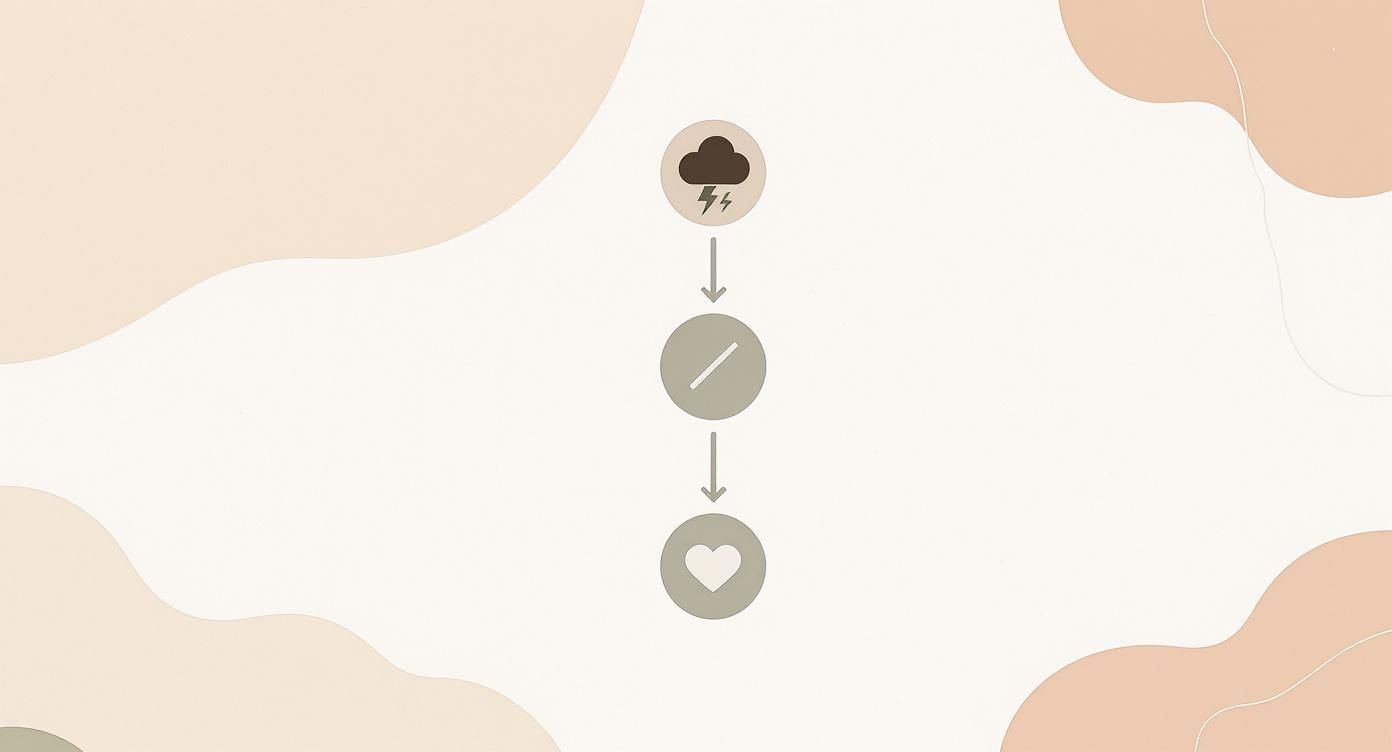
As you can see, the key is the strategic separation of people among whom sparks may fly (not necessarily in a positive sense) to ensure everyone’s comfort.
Let’s also note that the choice of table layout is closely related to budget. Rising wedding costs push many couples toward more intimate celebrations. With per-person costs ranging from 280 PLN to even 600 PLN per person, every guest matters. More on current trends and costs you can read in the analysis of the wedding market on Akademia Gastronomii. In such a situation, thoughtful guest seating is essential.
To help you decide, I’ve prepared a simple comparison of the two options.
Comparison of round and rectangular tables
| Feature | Round tables | Rectangular tables |
|---|---|---|
| Integration | Very good within the table, weaker between tables. Everyone sees everyone. | Good with immediate neighbors, practically zero with guests farther away at the table. |
| Atmosphere | Elegant, intimate, banquet-like. Fosters conversations. | Lively, communal, traditional. Builds a sense of unity. |
| Utilization of space | Less efficient, requires more space in the hall. | Very efficient, allows fitting more guests in the same area. |
| Decoration costs | Usually higher – each table requires a separate central decoration. | Often lower – one long arrangement (e.g., garland) can decorate the whole table. |
| Seating hierarchy | Practically non-existent, all are “equals.” | Clearly defined, seats at the ends are less desirable. |
| Ideal for | Weddings where free conversation and an elegant character are important. | Traditional weddings, receptions with many guests or in limited space. |
As you can see, there is no single perfect solution. The choice depends on your priorities.
Tip: Can’t decide? Consider a mixed layout! A combination of a rectangular head table for you and your witnesses with round tables for guests is a brilliant compromise. It emphasizes your role while giving guests the comfort and freedom that round tables provide.
Think about what matters most to you. Do you dream of an elegant banquet where guests discuss freely over a glass of wine? Or a traditional, loud feast where everyone feels like one big family? The answer to this question will be your best compass.
Creative ideas and modern planning tools
Tired of scribbling on paper who sits with whom and moving hundreds of name cards? Relax, the era of tedious wedding seating plans is long gone. Today, technology and a pinch of imagination can turn this planning nightmare into a fun part of the preparations.
Instead of manual puzzles, dive into the world of intuitive online tools. Special wedding planning apps let you create a virtual floor plan. With a few clicks, using a drag-and-drop method, you can test different configurations, move guests, and visualize the result in real time. Zero erasures, zero stress. And how much time you’ll save!
From guest boards to impressive place cards
When the virtual plan is ready, it’s time to show it to the world. A guest arrangement board is an absolute must-have, but it doesn’t have to be a boring poster at the entrance. Think of it as an extra decorative element that from the moment guests arrive pulls them into the atmosphere of your celebration.
- Mirror in a gold frame? If you dream of a glamour-style wedding, handwritten guest names on a mirrored surface is a killer choice. It looks incredibly elegant.
- World map for travelers? If you love travel, let each table bear the name of a country or city you visited together. It’s a great pretext for conversations!
- Wood and nature? Rustic weddings suit boards made from old window frames or wood slices, to which you attach guest lists.
But remember, the board is only a guide. The real finishing touch are the place cards – small details that not only mark the seat but can become a tiny gift and memento.
A place card is much more than a name tag. Pair it with a small jar of honey, a succulent in a pot, a handmade praline, or… a QR code that opens the door to your digital guestbook.
This is a brilliant and unobtrusive way to encourage relatives to share photos and videos. A QR code stylishly integrated into a place card becomes a natural, interactive element of the reception. Want to know where to place the QR code so guests actually use it? Our article has plenty of proven tricks.
And instead of bland table numbers, opt for something that tells your story. Name tables after your favorite songs, characters from a series you watched together, or constellations. This personal touch not only helps with organization but also shows guests a piece of your world and makes them feel truly special.
Have questions? We have answers!
Even the best-planned plan can raise questions. Don’t worry, that’s normal! We’ve gathered the most common doubts about seating guests and prepared practical, proven answers. Treat this as a cheat sheet that will dispel the last uncertainties.
Do we really have to assign guests seats?
Short answer: you don’t have to. But the long answer is: it’s definitely worth it. Not assigning seats is a recipe for chaos. Guests wandering around in search of a free chair, friends separated at different tables, and in the worst case someone ends up alone among complete strangers. A well-thought-out plan guarantees the event starts smoothly and without unnecessary stress.
What to do with guests who came solo?
First of all – never, ever create a “table for singles”. It’s the easiest way to embarrass someone and make them feel like they’re on the sidelines. Instead, incorporate singles into groups that already know each other, or with whom they have a chance to find common ground.
Proven tip: Sit a single guest in a group of open, sociable friends around a similar age. Also avoid a situation where one solo guest sits at a table with only couples. It’s a small gesture, but for the comfort of that guest it makes a huge difference.
What about guests who confirmed their attendance at the last moment?
Life is full of surprises, so always have a plan B. Prepare one or two “emergency” seats at tables where the atmosphere is more relaxed – for example among young, outgoing friends. That group will most easily and naturally welcome a new person at the table.
If there really isn’t space, don’t panic. Contact the venue manager. Experienced staff have seen it all and can discreetly add an extra chair without spoiling the arrangement.
As a Bride and Groom, should we approach every table?
Of course! It’s practically a required part of the program. Even the best guest seating cannot replace your presence and energy. Try to find a moment to approach each table, exchange a few words, thank them for coming, and raise a symbolic toast. It’s a beautiful gesture that makes everyone feel important and noticed.
Remember, the seating plan is just a tool, not a rigid rule. Its goal is to create perfect conditions for great fun and integration. Even if there are small slips, your loved ones will surely appreciate the effort to make everyone feel good. Rather than chasing perfection, focus on building a joyful atmosphere that everyone will remember for years. And a great complement to these memories will be short wedding wishes, which guests can give you in person or write in digital form.
Wishgram is a modern and simple way to collect all memories from your wedding in one place. Guests scan the QR code, record videos, take photos, and write wishes, and you receive a beautiful digital keepsake to enjoy for years. See how easy it is to create your guestbook at https://wishgram.app.
Article created using Outrank