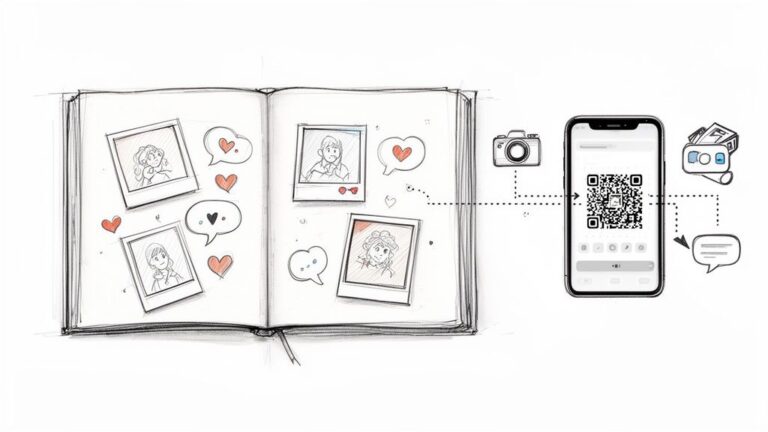
Forget dusty photo albums. A memory book is something much more alive: a collection of messages, photos, and even videos that tell the real story of a special day. Think of it as a collaborative time capsule, filled not just with pictures, but with the genuine voices and inside jokes of the people who were there.
So, What Is a Memory Book, Really?
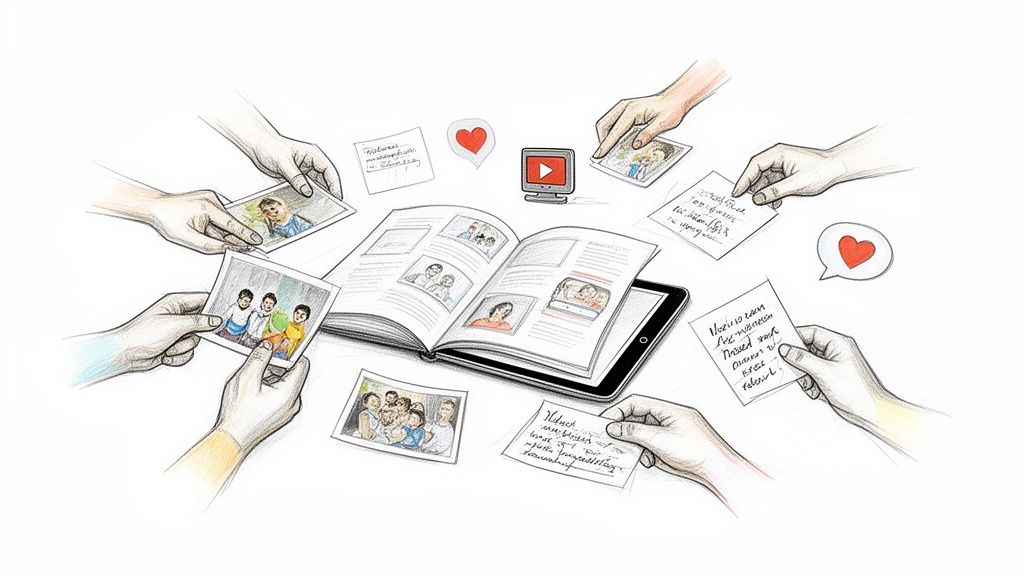
Imagine a memory book not as a finished object, but as the living story of a milestone. It’s where you find the candid moments, the heartfelt video messages, and the funny stories whispered between friends. Each person who contributes adds a new layer to the narrative, capturing the actual feeling of the celebration in a way no single photographer ever could.
The magic is in gathering these memories together. Instead of one person being the designated documentarian, a memory book turns every guest into a storyteller. This collective approach paints a much richer picture of the day, showing you the event through dozens of different eyes.
A Modern Spin on a Timeless Idea
The classic scrapbook has evolved. Today's memory books are dynamic, digital, and incredibly easy to create. Platforms like Wishgram have made the whole process as simple as scanning a QR code. Guests just point their phone cameras, and they can instantly upload photos, record video messages, or type out a heartfelt note. No app to download, no complicated instructions.
This simple tech transforms the old-school guestbook into a full-blown multimedia experience that captures both the sights and the sounds of your event. It's a powerful upgrade that tells a much more complete story. To see just how different it is, check out our guide on what a digital guestbook is and why you should use it.
A memory book is fundamentally about collective memory. It’s less about documenting a perfect event and more about preserving the shared feelings, laughter, and connections that made it special.
This move toward digital, collaborative keepsakes isn't just a niche trend. The global photobook and album market, valued at US$3.4 billion in 2025, is set to hit US$5.05 billion by 2034. Why the huge jump? It's all thanks to digital platforms that finally make creating and sharing these personal histories easier than ever before. Discover more insights on the growing photobook market.
From Scrapbooks to Digital Keepsakes
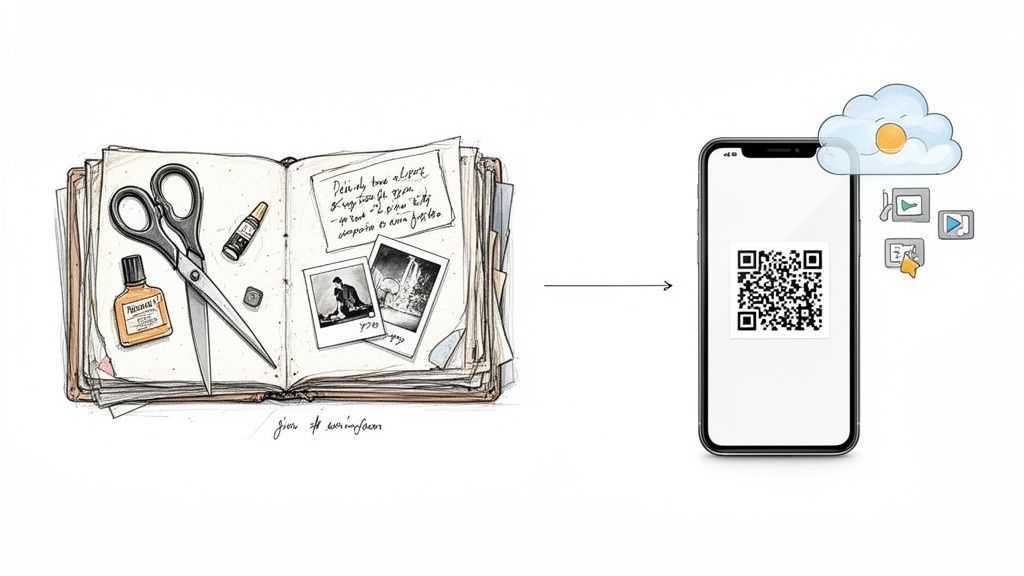
The itch to capture our best moments is nothing new. Long before we had digital galleries, people poured their hearts into handmade treasures like 19th-century friendship albums and carefully arranged scrapbooks. These were beautiful, tangible collections of handwritten notes, pressed flowers, and pasted-in photographs.
Every page was a labor of love, put together with scissors, glue, and hours of patient creativity. But as charming as they were, they had a big limitation: the creator was the only one adding memories. The book only ever showed their side of the story. It was a beautiful, but often lonely, project.
This long history set the stage for the memory books we know today. The jump from those old-school albums to modern digital versions is part of a much bigger story about how we share our lives. It’s a digital publishing revolution, powering an industry expected to see USD 155.7 billion in growth between 2025 and 2029. You can learn more about the expanding digital publishing market and its incredible momentum.
The Smartphone Changed Everything
Then came the smartphone, and suddenly the game was completely different. Now, every single guest at an event has a high-quality camera and video recorder sitting right in their pocket. This unlocked a whole new way of thinking about memory keeping—it could finally be a team effort, capturing the day from every possible angle.
Instead of just one person's point of view, you could suddenly gather dozens. The silly moments from the kids’ table, the quiet chats in the corner, and the wild dance moves on the floor could all become part of the shared story.
The heart of a memory book hasn't changed at all—it’s still about bottling up a moment in time. What’s been transformed is how we collect those memories, making the whole process more collaborative, instant, and alive than ever before.
From Hard Work to Instant Joy
Modern tools like Wishgram take this potential and run with it, using simple tech like QR codes to do the heavy lifting. A quick scan is all it takes to knock down the barriers of the old methods, creating a smooth path from your guests' phones straight to your memory book.
Here’s a look at how the modern way stacks up against the old-fashioned approach:
- The Old Way: You’d leave out a Polaroid camera and a pen, crossing your fingers that guests would stop by to add something to a physical book. More often than not, this left you with a few scattered entries and tons of missed opportunities.
- The New Way: Guests scan a QR code with their phones—no app download required. Instantly, they can upload photos, record quick video messages, and type out heartfelt notes directly into a shared digital space.
This digital shift makes the entire process feel effortless and far more engaging. It transforms a static, one-sided album into a living, breathing collection of multimedia memories, built by everyone who made the day special. The result is a richer, more complete keepsake that truly captures the spirit of the celebration.
Choosing Between Physical and Digital Memory Books
So you’re ready to create a memory book, but you’re stuck on a big question: go old-school with a physical scrapbook, or embrace the convenience of a digital version? It’s a classic dilemma. Each path offers a totally different way to hang on to those special moments, and they vary wildly in terms of effort, cost, and what you can actually capture.
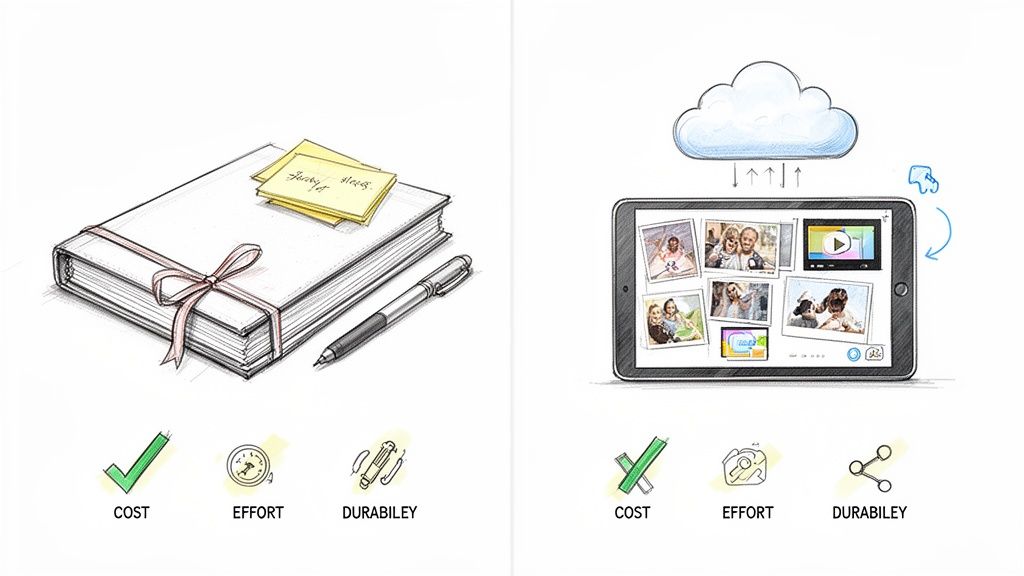
There’s a certain magic to a traditional memory book, isn’t there? The feel of heavy cardstock, touching a handwritten note, or seeing a real printed photo—it's wonderfully tangible. But let’s be honest, this route demands a lot of hands-on work. You’re looking at buying supplies, printing out photos, and then the painstaking process of arranging everything just right.
Plus, you're pretty much limited to whatever can be glued to a page, which usually means static photos and written messages. On top of that, physical albums are vulnerable. Spills happen, photos fade, and time takes its toll, making long-term preservation a real headache.
The Digital Advantage
Digital memory books, especially modern tools powered by QR codes like Wishgram, are a complete game-changer. They’re built for the way we celebrate now, where everyone has a powerful camera right in their pocket. The single biggest win is the incredible variety of memories you can collect.
Instead of just static pictures, imagine gathering all of this:
- High-Resolution Photos: Guests can upload their best shots directly from their phones, no compression, no quality loss.
- Heartfelt Video Messages: Capture the sound of laughter and the emotion in your loved ones' voices through short video clips.
- Typed Notes and Stories: Everyone can easily share their favorite memories or well-wishes. No more hunting for a pen or deciphering messy handwriting.
This multimedia approach creates a keepsake that’s so much more vibrant and alive. And because it's all stored securely in the cloud, your memories are safe from physical damage and accessible from anywhere, anytime.
Digital platforms completely remove the hassle of collecting memories. Guests can contribute in seconds, and you end up with a richer, more diverse collection of moments—without any of the messy glue or manual labor.
Physical vs Digital Memory Books A Quick Comparison
To really see the difference, it helps to put them side-by-side. This quick comparison should make it clear which format is the right fit for your event and your style.
| Feature | Traditional Memory Book | Digital Memory Book (e.g., Wishgram) |
|---|---|---|
| Effort | High; requires printing, cutting, and arranging everything by hand. | Low; collection is automated through a simple QR code. |
| Guest Accessibility | Limited to guests who physically visit a specific station at the event. | High; anyone with a phone can contribute instantly, from anywhere. |
| Content Variety | Static, limited to photos and handwritten notes. | Dynamic; includes high-res photos, videos, text, and even audio. |
| Durability | Vulnerable to spills, fading, damage, and getting lost over time. | Permanent; secure cloud storage protects memories indefinitely. |
| Sharing | Difficult; only one physical copy exists, making it hard to share. | Effortless; share a single link with anyone, anywhere, anytime. |
Ultimately, what matters most are your priorities. If you love the idea of a hands-on craft project, a physical book has its charm. But if you're looking for a dynamic, easily shareable, and effortlessly collected keepsake, a digital memory book is the clear winner. It transforms guest contributions into a living, breathing story of your celebration.
When Should You Create a Memory Book?
A memory book really comes alive when it’s tied to a huge life event, turning a single celebration into something you can hold onto forever. While you could make one for any get-together, certain milestones are just made for this kind of collective storytelling. These are the moments that shape our lives, and a memory book is the perfect way to bottle up all the voices and feelings that made them so special.
Think of it as the ultimate group gift. It’s a way to gather the perspectives of everyone who was there to celebrate with you. At a wedding, for instance, it goes so much deeper than the professional photographer's perfect shots. It captures the candid, heartfelt, and often hilarious moments from every table, preserving the day through the eyes of the people you love most.
Marking Life's Biggest Moments
But a memory book isn't just for weddings. Its real magic is how it can adapt to any occasion where shared experiences are the main event. It’s a powerful tool for capturing the unique vibe of a specific time and place.
Here are a few perfect occasions to get you started:
- Milestone Birthdays: Imagine hitting 30 and getting a book filled with life advice, funny stories, and old photos from friends and family scattered across the globe. It's a snapshot of who you are at that exact moment, celebrated by everyone who matters.
- Anniversaries: For a 25th or 50th anniversary, a memory book lets children, grandkids, and old friends share how the couple has touched their lives. It becomes a beautiful, moving tribute to a partnership that has stood the test of time.
- Baby Showers: This is your chance to collect well-wishes, pearls of parenting wisdom, and sweet messages for the baby-to-be. It’s a time capsule the child can read years from now, overflowing with love from before they even arrived.
- Farewell Parties: Whether it's for a retirement or for a friend moving away, a memory book is the perfect way to gather goodbyes, inside jokes, and promises to keep in touch. It gives them a meaningful keepsake to carry into their next chapter.
The true power of a memory book is its ability to bring all that emotion into one place. It creates a single, focused home for everyone to pour their love, laughter, and well-wishes, making sure those feelings are never lost.
A Growing Tradition in a Modern World
This idea of creating keepsakes for big events isn't just a fleeting trend; it's becoming a huge part of how we celebrate. The global photobook market, valued between $3.4 billion and $3.59 billion in 2024-2025, is expected to climb as high as $5.05 billion by 2034. That growth is being driven by families who want to preserve memories from weddings, birthdays, and anniversaries in a way that feels personal and unique.
In fact, this niche is a major player in the larger photo printing industry, a $24.2 billion market where custom event books are a dominant force. You can read the full research about the expanding keepsake economy.
Modern tools like Wishgram make this kind of collaborative memory-making possible for any celebration. With themes you can customize and support for multiple languages, the platform easily adapts to your event’s unique vibe. By giving guests a super simple way to contribute, it opens your eyes to just how many moments are worth capturing in a memory book.
How to Make a Digital Memory Book with a QR Code
Ready to give it a try? Modern tools have made building a beautiful, shared memory book almost effortless. Using a QR code-based platform like Wishgram, you can set up a system to automatically gather photos, videos, and messages, leaving you free to actually enjoy your own party.
Think of it as a "set it and forget it" solution. You do a little bit of prep work upfront, and then your guests take over, filling your gallery with heartfelt and candid moments while you celebrate. It really boils down to five simple steps.
1. Set Up and Customize Your Event Page
First things first, you need to create a digital home for all your memories. With a tool like Wishgram, this means setting up a dedicated event page. You’ll give your event a name (like "Sarah & Tom's Wedding"), set the date, and write a quick welcome message for your guests.
You can also tweak the look and feel to match your event's theme. This is the fun part—choosing colors for your QR code cards and the message screen your guests will see. It ensures every touchpoint feels personal and tied into your celebration's style.
2. Share Your Unique QR Code
Once your page is ready, the platform will generate a unique QR code. This little square is your golden ticket to effortless memory collection. The best strategy? Share it everywhere and make it impossible for guests to miss.
There are some really creative ways to use a QR code for your event to get everyone involved. Here are a few of the most popular methods:
- On Invitations: Pop the QR code right on your printed or digital invites. This gives guests a heads-up before they even arrive.
- On Table Cards: Place small, elegant cards with the QR code on every single table at your venue.
- At a Welcome Station: Set up a sign at the entrance encouraging guests to scan and share a memory as they walk in.
3. Let Guests Scan and Contribute
This is where the magic really happens. A guest pulls out their smartphone, scans the QR code, and is instantly taken to your custom upload page. Crucially, they don't need to download an app, which removes a huge hurdle for anyone who isn't super tech-savvy.
From this simple screen, guests can:
- Upload photos straight from their camera roll.
- Record a short, sweet video message right on the spot.
- Type out a personal note or share a favorite story.
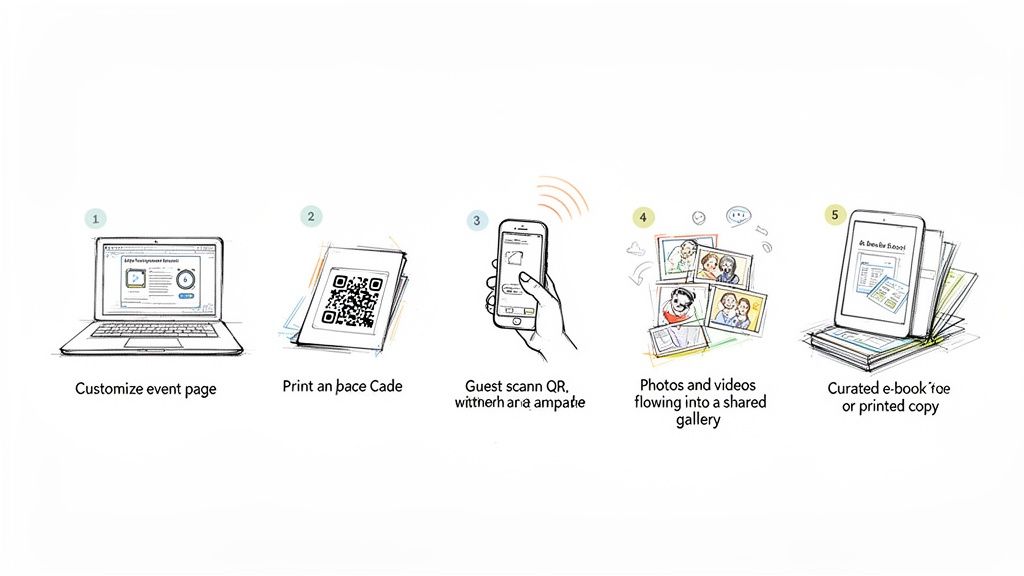
As you can see, the whole process is designed to be dead simple for both you and your guests. The goal is a smooth, successful, and fun memory collection experience for everyone.
4. Watch Your Gallery Fill Up
As people submit their photos and messages, they automatically appear in your private online gallery. You can literally watch in real-time as a rich, multimedia tapestry of your event comes to life, all without you having to lift a finger.
5. Curate and Create Your Final Book
After the confetti settles, you can log in to your dashboard to see everything that was collected. From here, you can pick out your favorite entries, arrange them in a beautiful layout, and generate a polished e-book. And if you're someone who loves a physical keepsake, you can often order a high-quality, hardcover print of your memory book directly through the service.
Tips for Collecting Heartfelt Guest Contributions
A truly great memory book is so much more than a folder of photos. It’s a tapestry woven from shared stories, inside jokes, and genuine emotion. But getting those amazing, heartfelt contributions doesn’t happen by accident. You can’t just stick a QR code on a table and hope for the best. You need to create an experience that invites people in and makes sharing feel like part of the fun.
It all starts long before the party. Build a little buzz by mentioning the memory book on your invitations or event website. A simple note like, "Help us build a collection of memories! We'll have a spot for you to share your favorite photos and stories with us," plants the seed. Your guests will arrive already thinking about what they might want to share.
Create a Dedicated Memory Station
At the event itself, make contributing as easy and inviting as possible. Set up a designated “memory station.” This doesn't need to be fancy—a small, well-lit table with a nice sign, your QR code displayed clearly, and maybe a few fun props is all it takes to draw people in.
The real secret, though, is giving your guests a little direction. A blank page can be intimidating. Instead of a generic "Leave a message," spark their creativity with specific prompts:
- "Share your favorite memory with the bride."
- "What's one piece of advice you have for the birthday girl?"
- "Record a short video telling your funniest story about us."
These little nudges help break through writer's block and pull out much richer, more personal stories than a simple signature ever could. For even more ideas on how to weave photo collection into your event, check out our detailed guide to learn how to collect wedding guest photos.
The secret to a memorable collection is making participation feel like a joyful part of the celebration, not a chore. Guide your guests with fun prompts, and they'll give you heartfelt memories in return.
Finally, don't be shy about reminders. Ask the DJ or MC to make a quick, friendly announcement encouraging everyone to scan the code. You can even send a follow-up email after the event with the link, giving everyone one last chance to upload those photos they forgot to share on the night.
Got Questions? We’ve Got Answers
As you get closer to creating a digital memory book, a few questions are probably popping into your head. It’s totally normal. You’re wondering how this whole thing actually works and if it’s really as foolproof as it sounds for everyone involved—especially Grandma. Let’s clear up those final doubts.
One of the biggest questions we get is, "Why not just use a hashtag on Instagram?" Sure, hashtags can pull public posts together, but they’re messy and you have zero control. Your precious memories end up scattered across a public feed, mixed in with random content, and often saved in fuzzy, compressed formats.
A dedicated memory book platform, on the other hand, is your own private, curated space. Every contribution is neatly organized in one gallery, preserved in its original high quality, and it all belongs to you. Think of it as the difference between a chaotic public square and a beautifully framed, personal photo album.
But Will My Guests Actually Use It?
This is a big one. You're worried about your less tech-savvy relatives, right? Will older guests be able to contribute without getting frustrated? Absolutely. The beauty of a QR code system is its dead-simple design. There are no apps to download and no accounts to create.
Here’s the entire process for your guests:
- Point their phone's camera at the QR code.
- Tap the link that pops up on their screen.
- Upload a photo or record a video straight from that webpage.
That's it. We designed it to be completely intuitive for all ages. If they can take a picture with their phone, they can share a memory. From your teenage cousin to your great-aunt, everyone can join in on the fun.
A digital memory book doesn’t replace social media; it elevates your memories into something more permanent and personal. It gives your most cherished moments a private, high-quality, and beautifully organized home that only your invited guests can see.
So, what happens to all those photos and videos after the party's over? With a service like ours, they’re securely stored in the cloud. You have total control to download all the original files, hand-pick your favorites for a stunning e-book, or even order a high-quality printed version to hold and cherish for years to come. Your collection of memories is safe, sound, and timeless.
Create a timeless keepsake that captures every voice and every smile from your special day. With Wishgram, you can effortlessly collect photos, videos, and messages from all your guests into one beautiful, private gallery. Start your digital memory book today at Wishgram.app.